Introduction
Artificial Intelligence (AI) is reshaping industries across the globe, and industrial automation is one of the most significant sectors experiencing this transformation. By integrating AI into manufacturing processes, businesses can enhance productivity, reduce operational costs, and improve product quality.
The Role of AI in Industrial Automation
AI technologies, such as machine learning, computer vision, and natural language processing, are revolutionizing how industries automate their processes. Here are some key areas where AI is making an impact:
- Predictive Maintenance: AI algorithms can predict equipment failures before they happen, allowing for timely maintenance and minimizing downtime.
- Quality Control: With computer vision, AI systems can inspect products in real-time, ensuring they meet quality standards and reducing waste.
- Supply Chain Optimization: AI can analyze complex data sets to optimize inventory management, logistics, and demand forecasting.
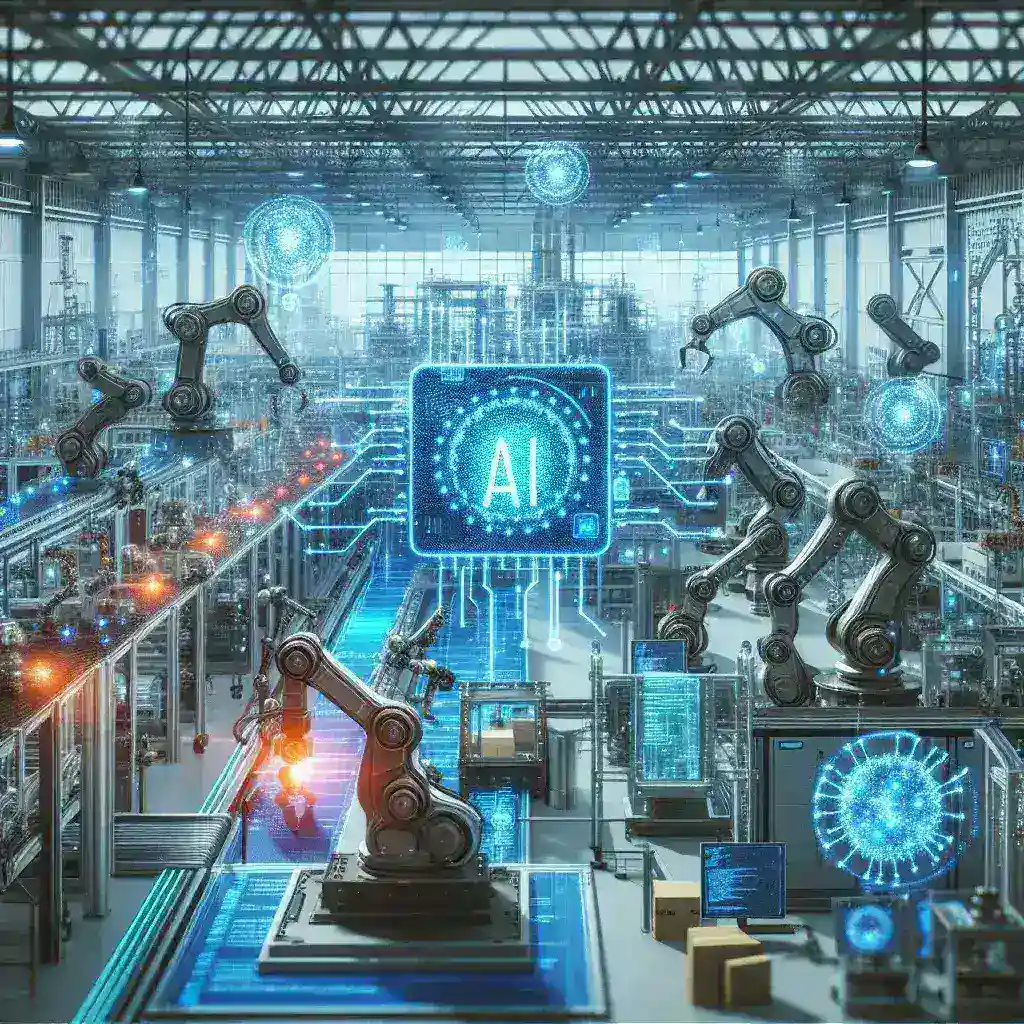
- Robotics: AI-driven robots can perform tasks that require precision and adaptability, handling complex assembly processes with ease.
- Energy Management: AI can help monitor and optimize energy consumption in manufacturing facilities, leading to cost savings and a reduced carbon footprint.
Benefits of AI in Manufacturing
Integrating AI into industrial automation brings several advantages:
- Enhanced Efficiency: AI systems can process data faster than humans, leading to quicker decision-making and streamlined operations.
- Reduced Operational Costs: By optimizing processes and reducing waste, manufacturers can significantly lower their costs.
- Improved Safety: AI can take over dangerous tasks from human workers, minimizing workplace injuries.
- Data-Driven Insights: AI can analyze vast amounts of data, providing insights that help businesses make informed decisions.
Challenges in Implementing AI
Despite its numerous benefits, implementing AI in industrial automation comes with challenges:
- Integration with Existing Systems: Manufacturers may face difficulties integrating AI solutions with their legacy systems.
- Data Quality: AI systems require high-quality data to function effectively, which can be a challenge for many organizations.
- Skilled Workforce: There is a need for skilled workers who can operate and maintain AI systems, which may require extensive training.
The Future of AI in Industrial Automation
The future of AI in industrial automation looks promising, with advancements in technology continuously evolving. As AI becomes more integrated with IoT, big data, and cloud computing, the possibilities for innovation in manufacturing processes will expand exponentially.
Conclusion
AI is a game-changer for industrial automation, offering numerous benefits that can help manufacturers stay competitive in a rapidly changing market. By embracing AI technologies, industries can enhance their operational efficiency, improve product quality, and pave the way for future innovations.
Leave a Reply